

 The Local Karori
Predator Free Karori desperately needs more volunteers to check its traplines. As Lee-Anne Duncan reports, it’s a pursuit perfect for teens completing their Duke of Edinburgh awards.
Karori has made great gains in the fight against rats, with residents setting backyard traps and dedicated volunteers monitoring traplines. However, that progress is under threat due to a drop-off in volunteers.
“I need about fifteen volunteers to cover the traplines, and at the moment I have eight,” says Phil Wisker, Predator Free Karori’s volunteer coordinator.
Over the past five years, 5000 rats have been caught in backyard traps or traplines. Last year 540 were killed, so there are still plenty of the invasive species out there. However, if a trapline has no assigned volunteer, it’s not being cleared and re-baited. That means fewer rats are being removed.
There are few requirements to volunteer for a trapline. People should be comfortable in the bush, although the traplines are close to roads, and they should own stout boots and gloves. Not being too sensitive to “weird and wonderful sights and smells” is an advantage, Phil says, since releasing dead rats from the snap traps is an essential part of the job. The peanut butter bait is supplied.
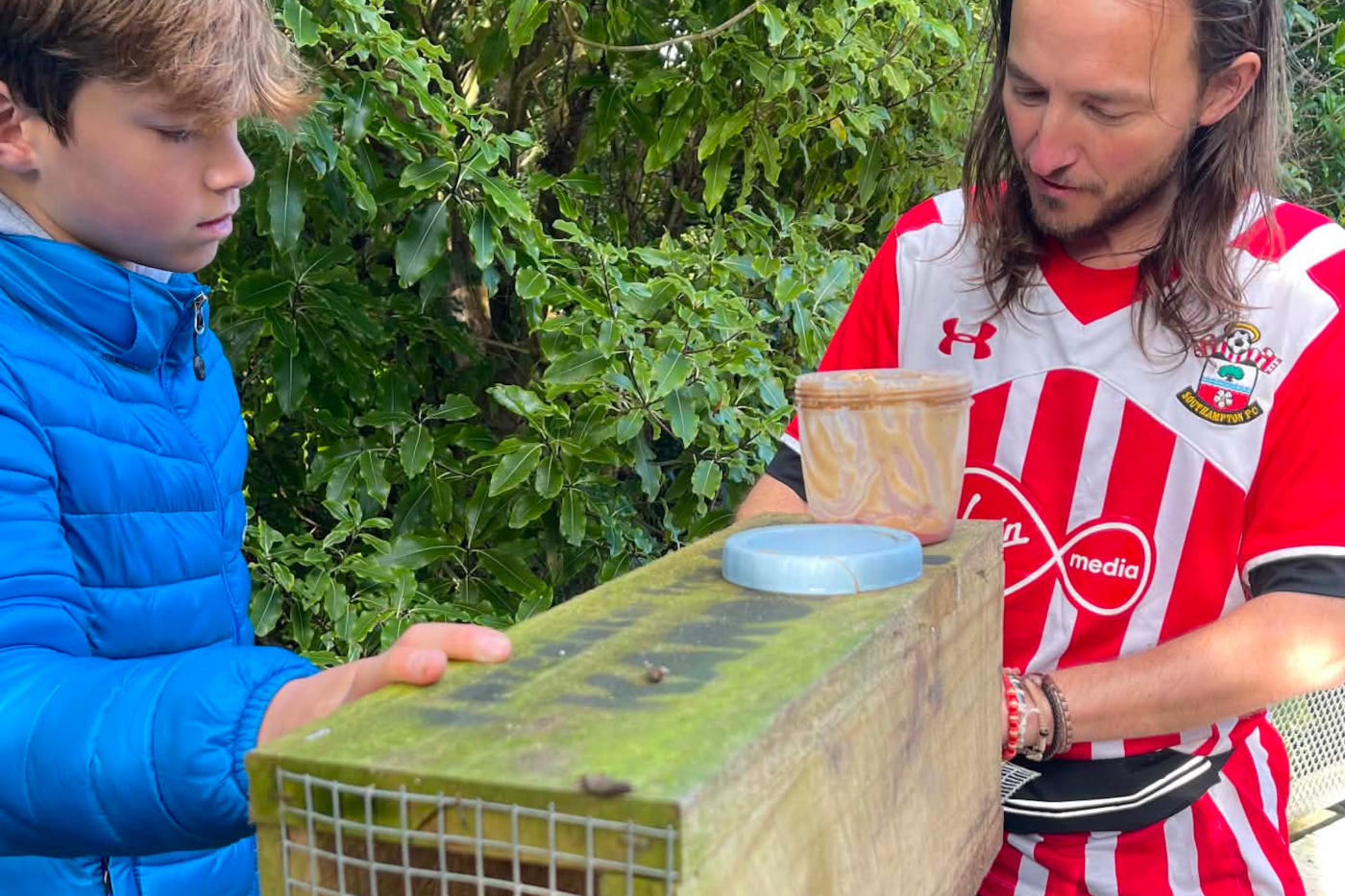
Phil Wisker demonstrates how to bait and set a rat trap for Charlie Kettle, who walks a trapline as part of his volunteering work towards a Duke of Edinburgh Bronze Award.
Timewise, Phil asks volunteers to walk their assigned trapline once a fortnight, clearing the five to ten traps on each line. “It usually takes about an hour. Some people do it on their way home from work.”
Phil says the ideal candidate is a teenager completing the voluntary hours required to achieve a Duke of Edinburgh Award. “I’ve had four contenders through and they were great. All they have to do is put me down as their reference, come and clock up their hours, then I write them a glowing reference.”
Charlie Kettle started trapping when he was in Year 8 and, now in Year 10, is working towards his Bronze Award. “When I started Duke of Edinburgh, volunteering with Predator Free Karori was an easy choice. It’s rewarding knowing that even checking a trapline near Birdwood Crescent is making a small difference in protecting our native wildlife for the future.”
Phil says the traplines are a vital part of what Predator Free Wellington – for which he is an Eradication Technical Officer – calls the “knock down stage”, where locals trap as many rats, stoats and weasels as they can.
Their efforts prepare the way for the eradication programme’s “Phase three”, where Predator Free Wellington turns its spotlight on the area that includes Karori. That might happen in a couple of years’ time, Phil says, and that’s when the whole community can play its part.
“We’ll have people knocking on doors in Karori, asking if we can put a trap or a bait station in their backyard. We’ve already given out 1500 traps in Karori, but it’s hard to know if people check their traps as they don’t always report their rats,” Phil says.
“This is a whole-of-community project. Without the community, all this doesn’t work. So, if you have a trap, please check it, clear it, and reset it. The fewer rats, stoats and weasels, the safer our native species are.”
To order a rat trap for your backyard, email pfkarori@gmail.com. A $10 koha is requested.
OTHER STORIES
... loading ...